
Nigeria sits on one of Africa’s strongest leather raw material bases. Yet the country behaves like a supplier of scraps not a serious manufacturing economy. The leather industry today is a mirror of how value keeps slipping through Nigeria’s fingers.
Nigeria is one of the biggest sources of goatskin and kidskin in West Africa. Industry bodies say the country supplies about 60% of the region’s goatskin and kidskin. Trade estimates also place Nigeria at around 46% of West Africa’s supply and close to 18% of Africa’s total.
This should make Nigeria a continental leader in leather right? It has not.
The reason is simple. Nigeria exports leather at the wrong stage. Most shipments leave the country as raw or semi processed skins where profits are low and competition is brutal.
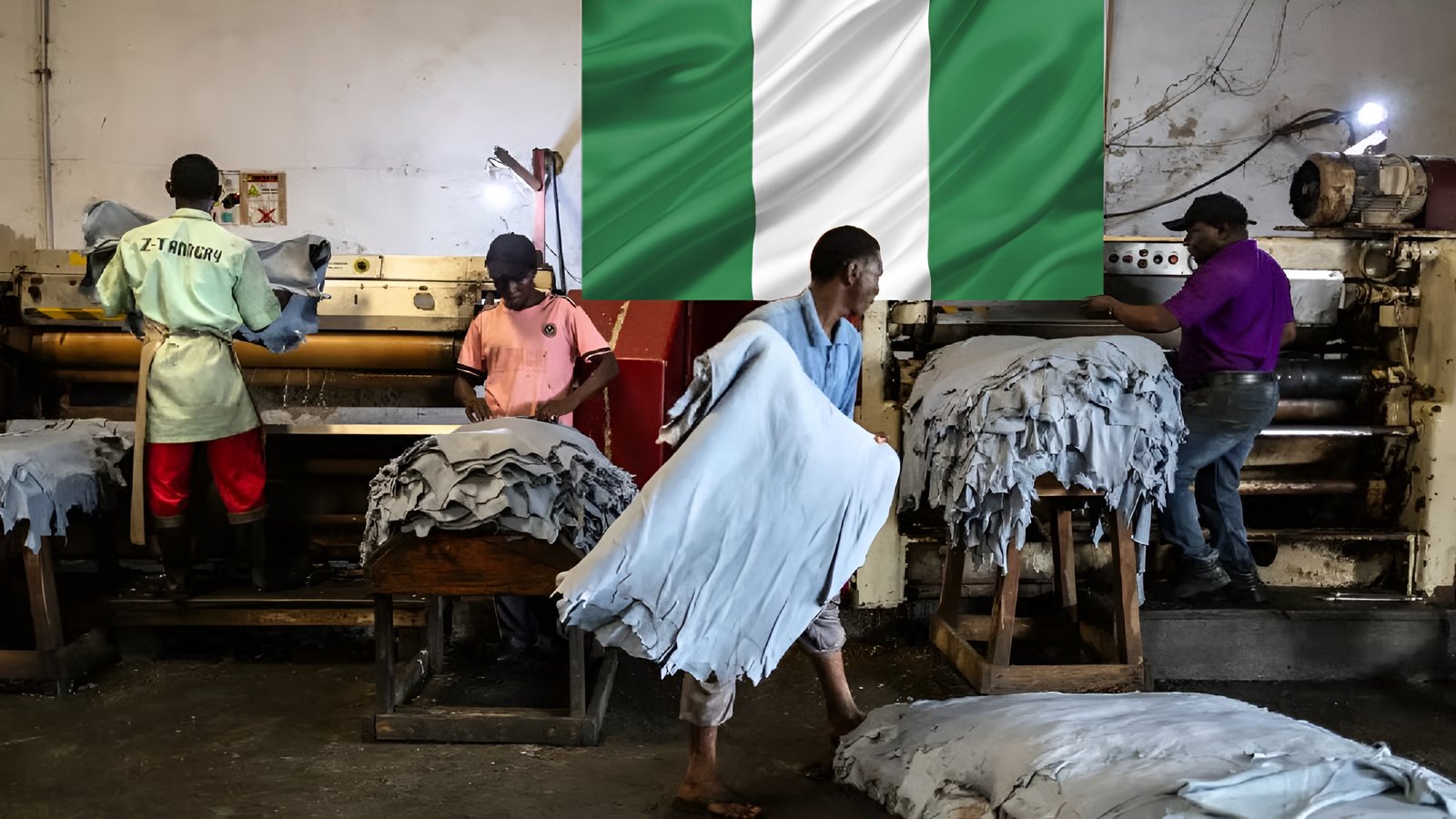
Industry estimates from NILEST show that Nigerian tanneries process between 40 and 50 million skins every year. That scale is enough to support a globally competitive leather manufacturing industry. Yet most of this output never moves into end functional products such as Shoes, bags and other leather products as they are made elsewhere using Nigerian raw materials.
Export figures expose the gap. Nigeria’s leather exports peaked at about US$117 million in 2018. Later estimates put exports closer to US$272 million.
Policy projections show the sector could earn over US$1 billion a year with proper value addition and export alignment. These numbers sound big until they are compared with the potential. The money is not missing. The execution is.
The Nigerian leather industry is already a major jobs producer. From livestock markets to tanneries and from footwear clusters to bag makers hundreds of thousands of Nigerians depend on it. The problem is not employment potential. The problem is that most jobs sit at the lowest value end of the chain.
Lagos State is trying to change this. The Oluremi Tinubu Industrial Leather Hub is the most serious effort in decades to fix fragmentation.
State projections say the hub could target ₦387.5 billion (~US$273 Million) in annual exports support over 10,000 jobs and train tens of thousands of artisans with a focus on women and youth.
If even part of this output reaches global markets as finished leather goods Lagos alone could change Nigeria’s export profile. But infrastructure alone will not fix the industry. Quality standards certification systems, stable raw material supply and export discipline are non negotiable.
One major threat comes from raw material leakage. Hides and skins are diverted into ponmo consumption. Federal agencies including RMRDC have warned that this starves tanneries of quality inputs. This is not about culture. It is about industrial survival.
Trade data already shows the danger. Nigeria imports large volumes of finished leather products while exporting far less in value added form. 2025 trade figures confirm imports far exceed exports. Nigeria is funding other countries’ factories instead of its own.
By 2026 the choice will be clear. Either Nigeria prioritises finished leather goods enforces standards and treats hides and skins as strategic inputs or leather will remain a missed opportunity. Execution will decide whether leather becomes a true economic driver or stays a story of wasted potential.
Source: The Guardian, Nigerian Govt Portals & NILEST
Related News
Nigerian First Lady Inaugurates Lagos Industrial Leather Hub to Promote Made in Nigeria Leather Products and Exports