
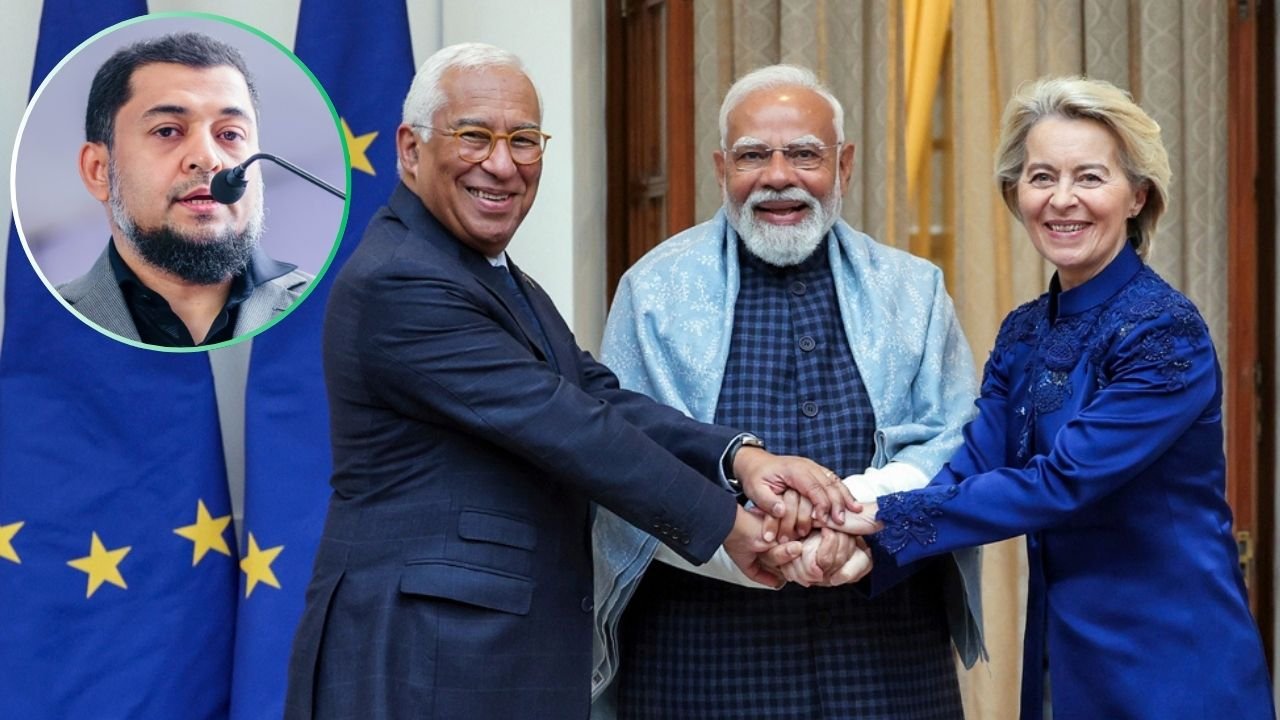
India’s leather industry is betting big on Europe after the India-European Union Free Trade Agreement (FTA) was signed on 27 January 2026. According to multiple sources, exporters believe the deal will sharply raise shipments to the 27 country bloc and give India a stronger position against Vietnam, China and Bangladesh.
The agreement will bring tariffs on Indian leather, leather products and footwear down to 0% from the earlier range of 2.5% to 17%.
Europe already plays a dominant role in India’s leather exports. In FY 2023-24 India exported $4.69 billion worth of leather, leather products and footwear worldwide. Out of the top 10 export destinations 7 are European Union countries including Germany, Italy, France, Spain, Belgium, Netherlands and Poland.
These 7 EU nations together imported leather and footwear worth about $1.61 billion from India in FY 2023-24. This means the EU alone accounted for around 34% of India’s total leather exports during the year.
Germany is the largest EU buyer with imports worth $535 million followed by Italy at $319 million.
France, Spain, Belgium, Netherlands and Poland together added another $756 million in imports from India.
Exporters say the zero-duty access now puts India on equal or better footing than Vietnam in Europe and could even pull business away from China.
Talking to Businessline Council for Leather Exports, Regional Chairman, Abdul Wahab said
“This zero duty is going to be a big push. This was one major advantage which Vietnam had. Now Indian exporters can look at this as a big advantage to bring the business from Vietnam and China to India”
– Abdul Wahab, Regional Chairman, Council for Leather Exports
The EU opportunity also comes at a time when Indian exporters are under pressure in the US market. Tariffs as high as 50% have forced exporters to offer discounts of 10% to 30% and in some cases up to 40% and lose orders to other Asian countries.
A few days back Council for leather exports, chairman, Ramesh Juneja said “We expect our exports to EU to rise from the current $2.25 billion to $6 billion by 2030”
With zero tariffs and Europe accounting for over one third of exports the deal could become the biggest growth driver for the industry in the years ahead.