
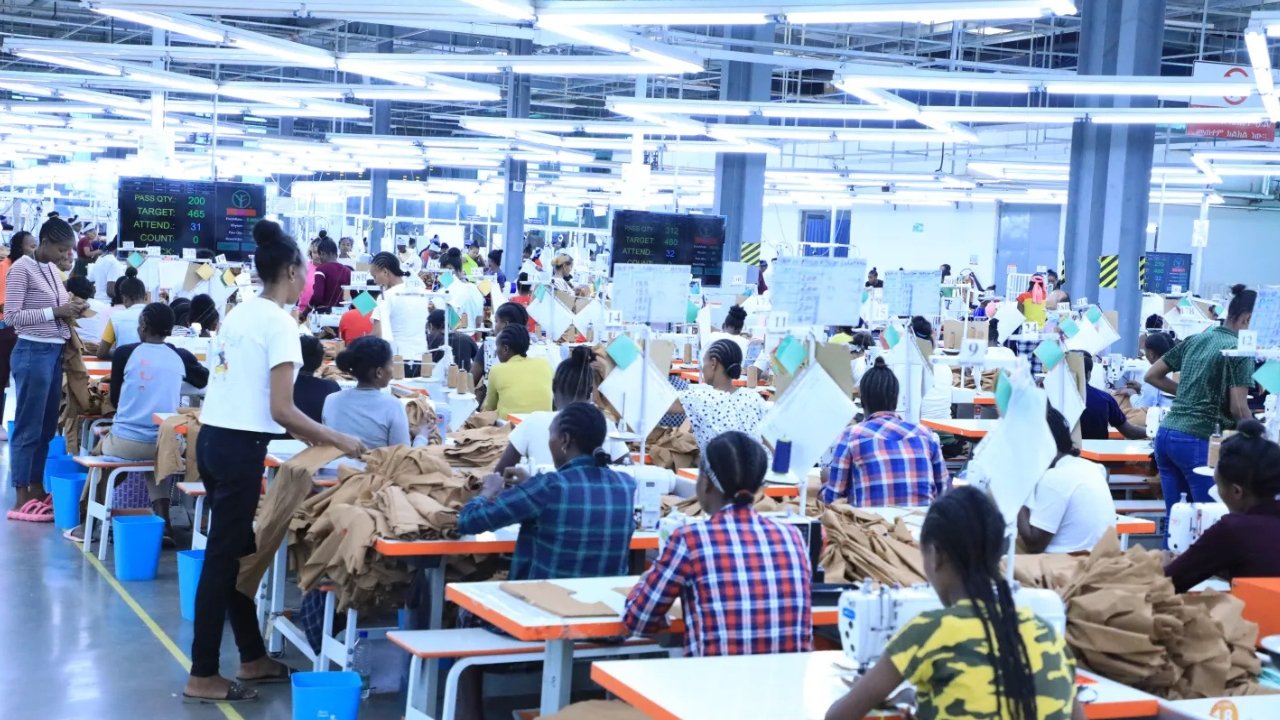
The International Labour Organization (ILO), with support from the Government of Japan, has launched a new project to improve Ethiopia’s leather, textile and garment industry. The initiative will focus on making factories more climate-resilient, safer for workers and aligned with global sustainability standards.
It will be implemented across key industrial cities and aims to prepare the sector for future risks.
The programme falls under the ONE ILO Siraye Programme and targets 40 factories in Hawassa, Addis Ababa, Adama, Dukem and Kombolcha. It combines training, policy support and technology upgrades to help businesses improve productivity while reducing environmental impact.
At the factory level, companies will receive SCORE Training along with Kaizen-based methods to improve efficiency. This will help reduce waste, cut energy use and improve overall production systems.
The project will also introduce digital tools to monitor workplace safety risks like heat stress and poor ventilation in real time.
The initiative also includes the Women’s Leadership Development Programme. This will train women workers with leadership and supervisory skills to help them grow within the industry and build more inclusive workplaces.
Japanese expertise will play a key role, especially in energy efficiency and cleaner production systems. The project will bring practical solutions suited to Ethiopia’s industrial needs.
At the national level, the programme will support discussions between government, employers and workers to identify policy gaps and improve business practices. It will also generate data on climate risks and safety standards to guide future policies.
The project will run from 15 March 2026 to 14 March 2027, aiming to build a stronger, more sustainable and inclusive manufacturing sector in Ethiopia.