
The European Commission has officially proposed excluding hides, skins and leather from the EU Deforestation Regulation (EUDR) as part of a wider simplification package aimed at reducing compliance burden and ensuring smooth rollout of the law across the EU, through a draft delegated act published on May 4, 2026, marking a major victory for the European leather industry after years of advocacy.
The EU Deforestation Regulation was adopted nearly 3 years ago to ensure goods sold in the EU do not contribute to deforestation or forest degradation. It covers commodities like cattle, wood, cocoa, soy, palm oil, coffee and rubber and requires companies to prove products are not linked to recently deforested land.
The law was originally set for December 2024, but was delayed. It will now apply from 30 December 2026 for large and medium companies and from 30 June 2027 for micro and small enterprises.
The Commission had committed to review the law and publish its findings before the end of April, and on April 30, 2026, EU officials told Reuters that leather could be removed from the regulation. The May 4, 2026, proposal now formally reflects and confirms that direction.
The potential exclusion follows intensive efforts by leather industry groups such as COTANCE, which made their case to EU lawmakers and European Commission representatives multiple times and at a recent meeting in Brussels on April 8, 2026.
The meeting included European Commission officials, Members of the European Parliament, industry leaders and delegates from the USA, India, Brazil, Japan, Australia, Vietnam, Sweden and Canada.
They argued that leather is a byproduct of the meat and dairy industry and does not drive deforestation. They said raw hides account for about 1.4% of the value of a bovine carcass and do not influence cattle farming or land use decisions.
They also presented research from the Sant’Anna School of Advanced Studies in Pisa based on over 94 million data records, 29,200 serial titles, 330,000 books and 28 stakeholder interviews, which found no scientific link between leather and deforestation. A study from Montana State University also found that leather demand has no measurable influence on cattle hide supply.
The global leather industry united under the International Council of Tanners (ICT) with support from the International Meat Secretariat and the International Union of Hides, Skins and Leather Trade Associations. They also sent a joint letter to European Commission President Ursula von der Leyen calling for the removal of leather from the regulation.
The Commission’s draft delegated act released on May 04, 2026, now proposes removing hides, skins and leather from Annex I of the regulation. This targeted legal tool allows changes to product scope without reopening the full law.
The draft is open for public feedback until 1 June 2026. Following the 30-day public consultation, the European Parliament and Council will have a 60 day period to approve the delegated act or request its revision. The act is expected to enter into force by summer 2026
The proposal also adds products like soluble coffee and certain palm oil derivatives, while excluding items such as retreaded tyres and exempting product samples, packing materials, used and second hand goods and waste.
“Today, European Commission saved more than 30,000 jobs across European tanneries and sent a clear signal to the world: the leather industry is not a problem to be regulated away — it is a solution to be invested in.”
– Manuel Rios, President, COTANCE
COTANCE said including leather in the regulation would not save a single tree but would disrupt supply chains, increase compliance costs and risk shifting production to regions with weaker environmental standards, while also creating waste if hides and skins are not processed.
“This is a historic moment for the tanning industry. The Commission has rectified a fundamental flaw that has existed since the EUDR proposal was first put forward, confirming what logic has long suggested: converting a by-product of livestock into leather does not drive deforestation.”
– Edoardo De Paola, Secretary General, COTANCE
The group also said the industry remains committed to traceability, responsible sourcing and supply chain transparency, with ongoing investments in traceability systems and standards.
“This is fantastic news! Thanks to all the perseverance and support received from the global leather industry, convincing the Commission that leather is not a driver of deforestation was a collective movement and therefore also a collective achievement!”
– Gustavo Gonzalez-Quijano, Former Secretary General, COTANCE
Alongside the scope changes, the Commission introduced simplification measures expected to reduce annual compliance costs by about 75% compared to the original regulation.
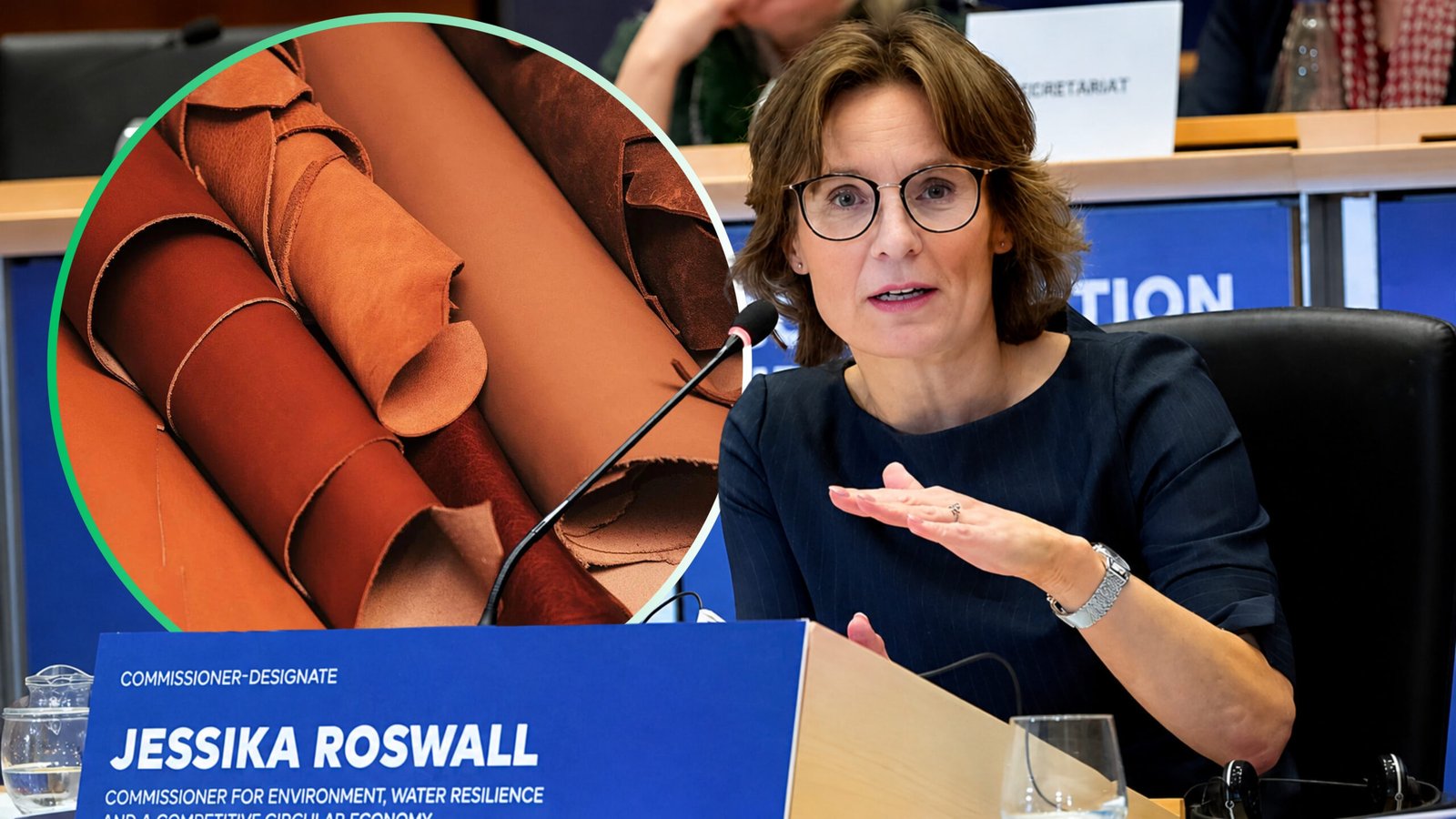
“Today we introduce simplification measures which together with previous simplification efforts will substantially reduce administrative burden. They are expected to reduce annual compliance costs for companies by about 75%. Our efforts are fully focused on facilitating implementation in the most efficient way. We all now need to work towards a successful entry into application of the law by the end of 2026 and keep in mind its important objective of reducing deforestation globally.”
– Jessika Roswall, Commissioner for Environment, Water Resilience and a Competitive Circular Economy, European Commission
The proposal has been widely welcomed by the global leather industry and especially its a big win for the European leather industry, which sees it as a major regulatory win and a recognition of its long-standing position on leather as a byproduct not linked to deforestation.