

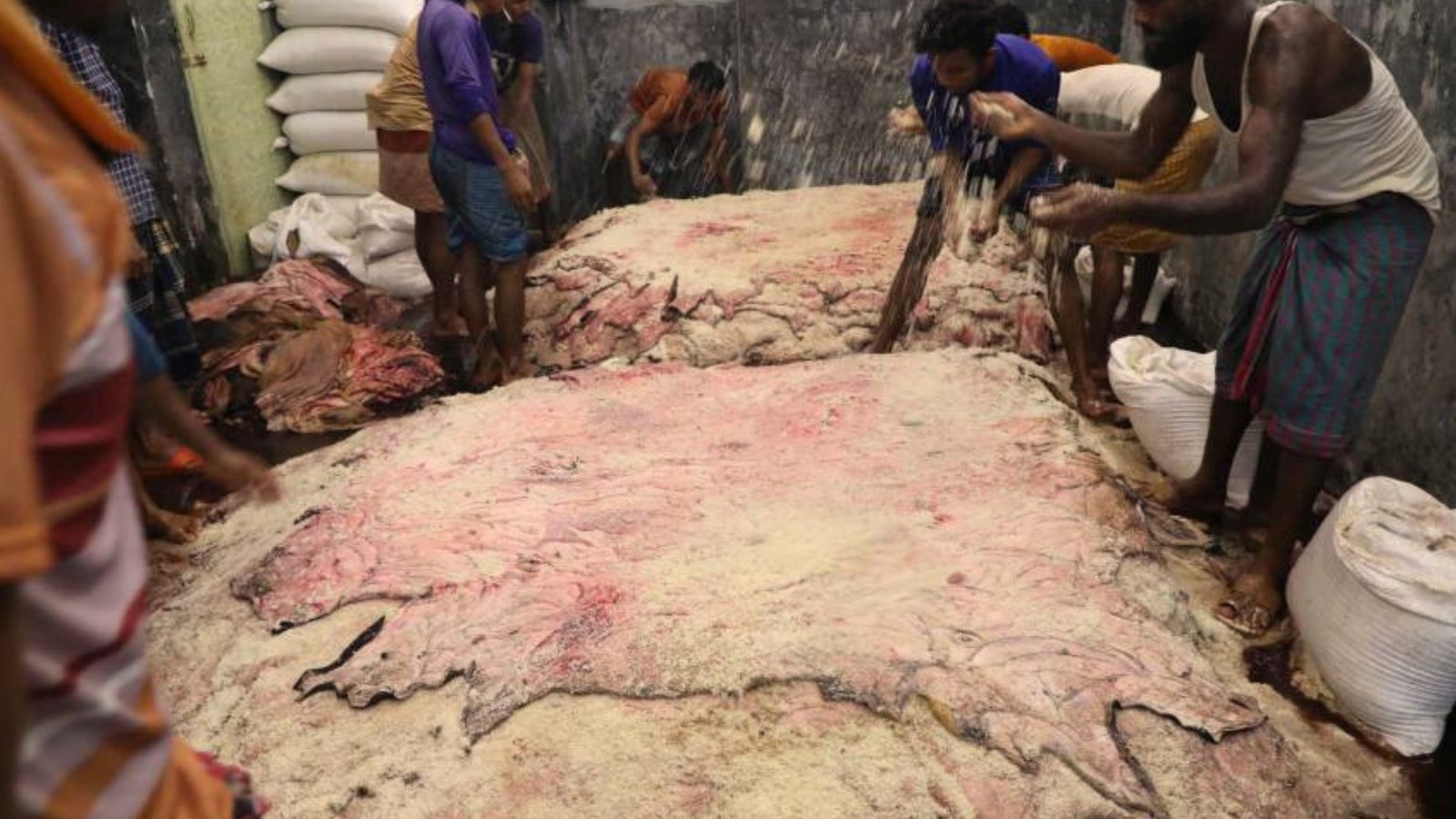
The Greater Chattogram Rawhide Traders Cooperative Society Limited has placed several demands before the Bangladesh government ahead of Eid al-Adha, seeking urgent steps. The demands were raised during a press conference held on 9 May at the association’s office in Aturar Depot, Chattogram.
Leaders of the association said the rawhide business in Chattogram is close to collapse due to years of mistrust between traders and tannery owners, unpaid dues, failure to maintain government-fixed prices and continuous financial losses.
Mohammad Yunus, general secretary of the association, said the number of rawhide traders in Chattogram has dropped sharply in recent years. He said around 140 to 150 traders were once active in collecting and preserving rawhides in the port city, but only 30 to 40 traders now remain in business.
He added that many of the association’s 112 members have already left the trade due to losses.
Association President Md Muslim Uddin alleged that tannery owners buy salted rawhide at prices 30% to 40% lower than the rates fixed by the Ministry of Commerce before Eid.
“Prices declared by the government before Eid are not reflected in the actual market after the festival. As a result, traders are compelled to sell rawhides at a loss.”
– Md Muslim Uddin, President, Greater Chattogram Rawhide Traders Cooperative Society Limited
The association said nearly TK20 crore in dues from 2016 to 2019 still remains unpaid by several tannery owners. Many traders who borrowed money to buy rawhide later became bankrupt after failing to recover payments.
Traders said Chattogram handles around 350,000 to 400,000 salted hides every Eid season, making it one of Bangladesh’s biggest rawhide markets. However, due to the shortage of local tanneries, most hides are transported to Dhaka.
The association demanded reopening closed tanneries including Madina Tannery in Chattogram and called for government support to help more tanneries secure Leather Working Group certification.
The traders also warned that cattle diseases such as lumpy skin disease, anthrax and pox-related infections are damaging hide quality and increasing industry losses. They urged the Ministry of Fisheries and Livestock to strengthen vaccination and treatment programmes.
The association further demanded a monitoring cell involving the government, Ministry of Commerce and tannery owners to jointly fix rawhide prices and ensure proper implementation after Eid.
Traders also advised the public to apply salt on hides immediately after sacrifice and sell them only to authorised traders or warehouses to maintain hide quality.
Speakers at the event said the leather sector can recover and contribute strongly to Bangladesh’s economy if proper planning, policy support and market management are ensured.