
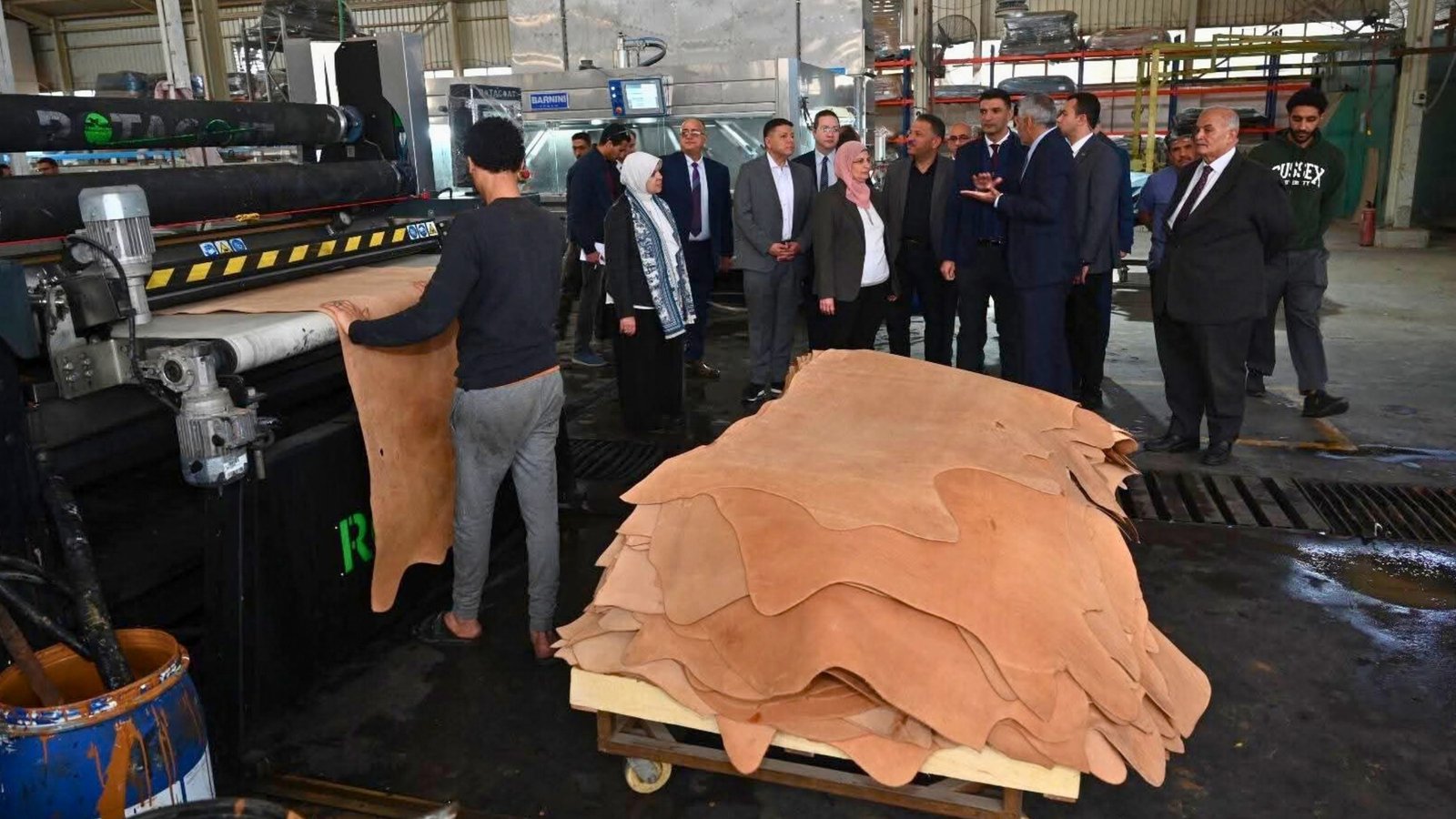
Egypt’s Minister of Industry Eng. Khaled Hashem visited Al-Rubiki Leather City to review factory operations, the Technology Center for Leather Tanning, and ongoing projects aimed at boosting exports and supporting investors.
The visit included officials from the General Authority for Industrial Development, Cairo Investment and Development Company, the Leather Export Council, and the Italian Agency for Development Cooperation.
Hashem inspected the second phase of glue factories and ongoing work in tanneries, directing that units be completed quickly to meet investor needs and accommodate relocated tanneries. He said the Leather City is one of the region’s most important integrated industrial projects, covering the full leather value chain from tanning to finished products.
The government plans to offer new production units in the third phase to modernize Egypt’s leather industry and attract international companies with advanced technology and marketing capabilities.
Mahmoud Sarg, Head of the Leather Export Council, said Egypt has a clear competitive advantage in leather tanning, which forms the backbone of the country’s leather industry and contributes significantly to national income. He highlighted efforts to improve rawhide quality through livestock development and veterinary programs, alongside enhancing technical and logistical services in Robbiki Leather City.
Robbiki Leather City, built on 500 feddans (~519 acres), is designed to organize the tanning sector, improve product quality and restore export growth after recent declines.
Sarg said the city’s infrastructure and specialized technology center give it the potential to become a regional hub for leather trade. Strengthening logistical services and international promotion are key to attracting foreign investment and opening new export markets.
The government is addressing longstanding challenges in the leather sector, following strategies used in other industrial zones like Damietta Furniture City, to boost Egyptian exports in tanning, shoe, and bag manufacturing.