
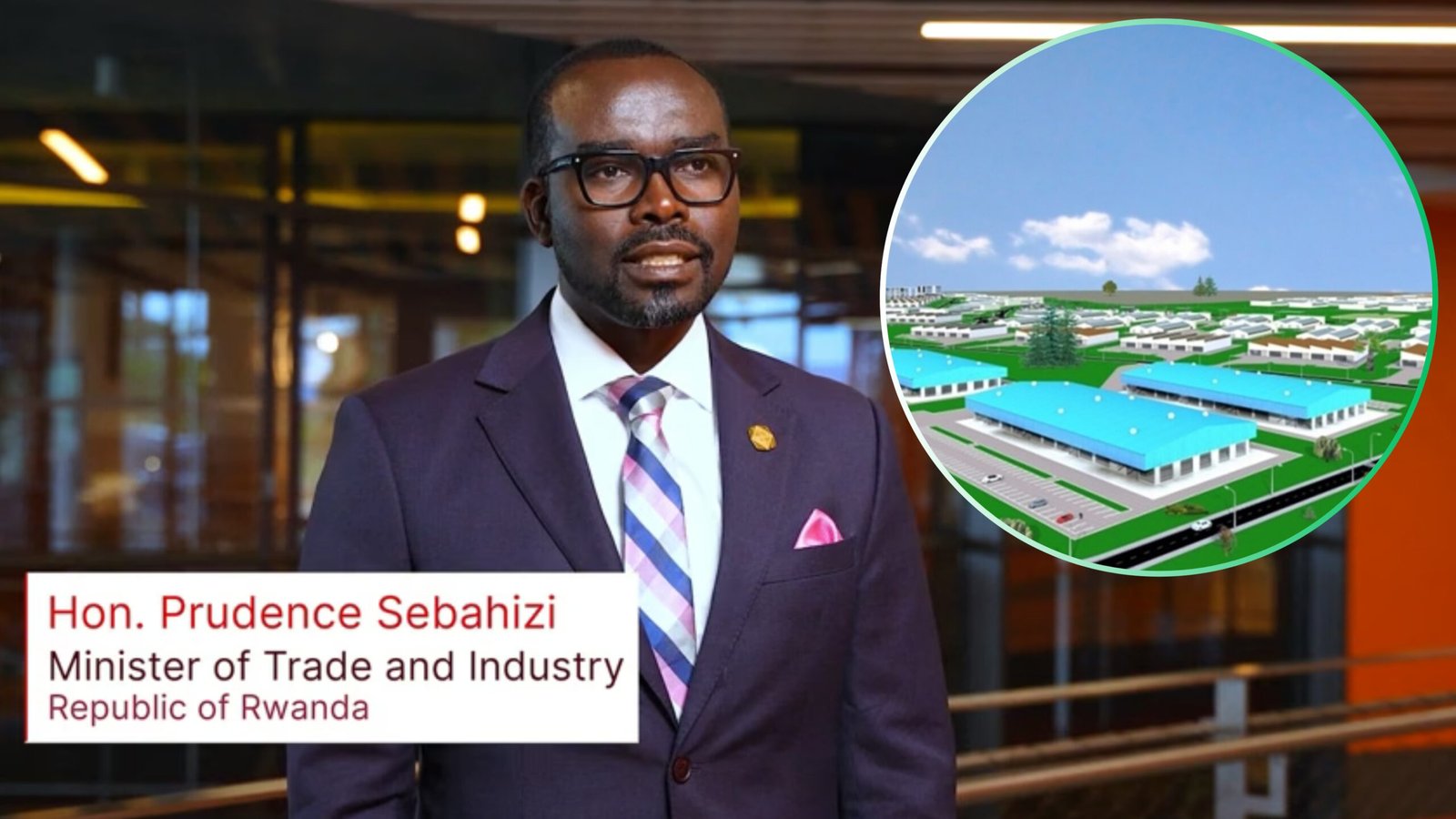
Rwanda’s government has shifted the planned national leather tannery park from Bugesera District to Gicumbi District after authorities found that the Bugesera Special Economic Zone could not host the facility. The update came during discussions on the 2026/27 budget allocations before the parliamentary Committee on State Budget and Patrimony.
Prudence Sebahizi, Rwanda’s Minister of Trade and Industry, said the tannery park was originally planned for the Bugesera Special Economic Zone under the country’s garment and leather development project.
He said the government later carried out a feasibility study to identify another location after realising the site in Bugesera was unsuitable.
ALSO READ: Rwanda Tannery Park Project Faces Relocation After SEZ Withdrawal
“The project for the establishment of the tannery park made it necessary to relocate the site initially planned in Bugesera to Gicumbi District, resulting in the non-utilisation of the previously allocated budget of Rwf4.58 billion (~$3.14 million)”
– Prudence Sebahizi, Minister of Trade and Industry, Rwanda
Sebahizi told MPs that the relocation will not affect the project timeline and the tannery park is still expected to be completed by 2029.
He also said the government needs Rwf20 billion (~$13.7 million) for the garment and leather development project, including the tannery park, expos and exhibitions. However, Rwanda is yet to secure an investor for the project. The government has allocated Rwf538 million (~$368,000) for the 2026/27 fiscal year.
In 2025, former Prime Minister Édouard Ngirente said the tannery park could generate $430 million in annual revenue once fully operational.
The project is part of Rwanda’s National Strategy for Transformation (NST2) for 2024/2025 to 2028/2029. Rwanda’s industrial policy for 2024 to 2034 also identified the leather goods sector as a key opportunity for producing boots and shoes for the local market and higher-value export products such as bags and jackets. The sector also supports cattle farmers, tanneries and related services while creating jobs.
ALSO READ: Egyptian Investor Eyes Investment Opportunities in Rwanda’s Leather Industry