
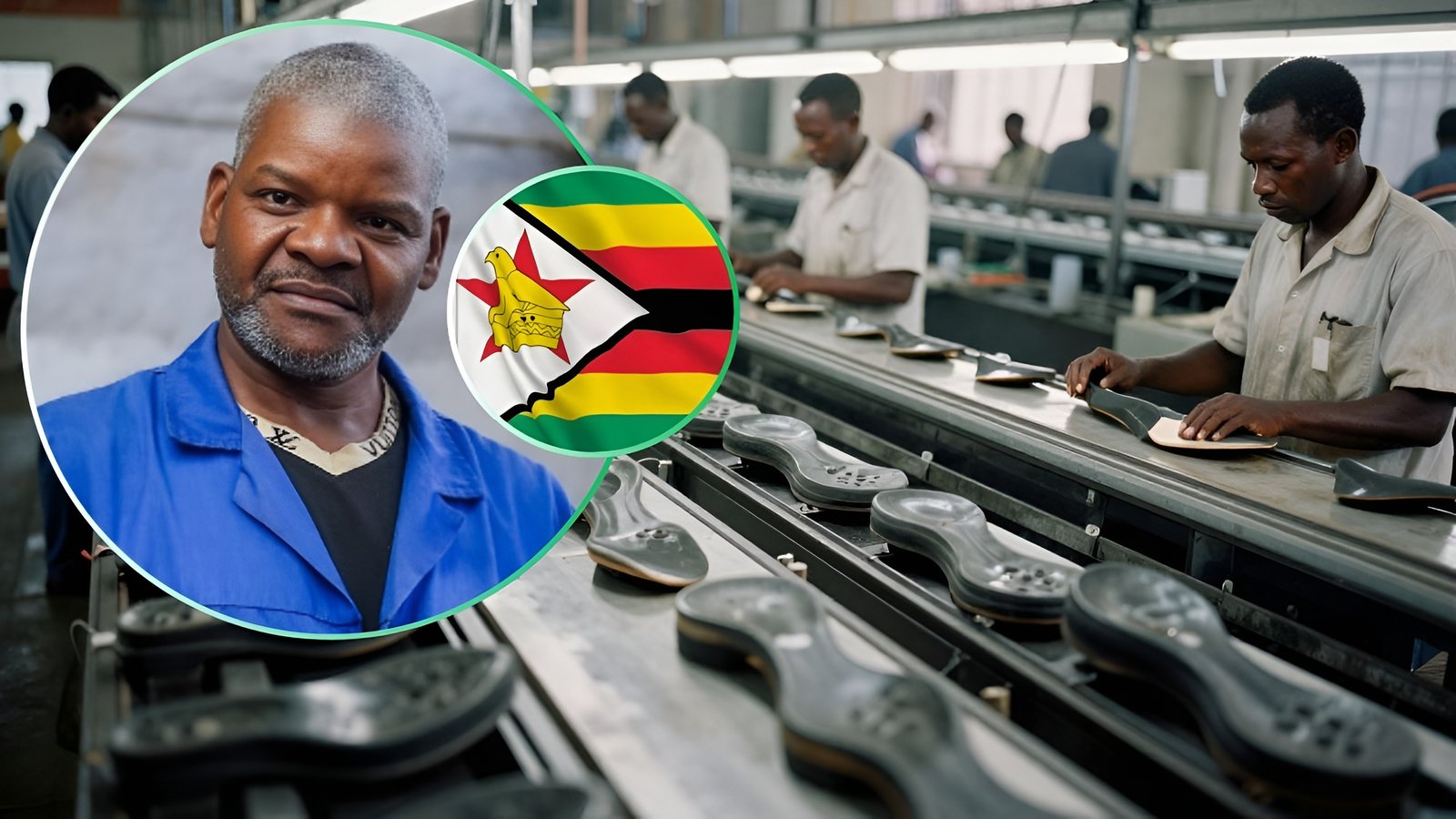
Zimbabwe has taken a major step toward fixing one of its weakest industrial links with the launch of a new shoe soles lasts and accessories factory in Harare.
The factory is expected to reduce the flood of cheap imported shoes and help local manufacturers make better quality footwear using locally made components.
Shoe soles lasts and accessories are the backbone of any good shoe. Until now Zimbabwean shoemakers had to depend heavily on imports which increased costs and slowed production.
According to ZimTrade Zimbabwe imports about 12.8 million pairs of shoes every year while total annual footwear demand stands at around 14.3 million pairs.
The new facility is owned by Lituo Shoe Outsoles and Accessories Manufacturing Private Limited. Several machines have already been installed and more equipment is arriving this weekend to complete the setup.
The factory is expected to begin operations by the end of this month (January 2026) with the capacity to produce up to 80,000 pairs of shoes per month.
According to the Zimbabwe Investment and Development Agency (ZIDA) project represents an approved investment of about US$1.2 million. This includes US$658,507 invested in capital equipment imported from abroad, US$500,000 allocated towards factory set-up and related infrastructure and a US$50,000 foreign exchange equity injection.
The company plans to mainly supply local shoe manufacturers, leather processors, SMEs and industrial clusters across Zimbabwe. The goal is to cut dependence on imported inputs and strengthen local supply chains.
The factory is also working closely with the Zimbabwe Leather Development Council (ZLDC) and plans to expand into regional markets once local demand is met.
“We had a big gap in components like soles, glues and accessories and this investment will change that”
– Fungayi Zvinondiramba, Secretary General
Bulawayo Leather Cluster
Industry players say the timing is critical as Zimbabwe’s leather sector is being revived under the Zimbabwe Leather Sector Strategy 2021 – 2030.
One of the biggest gaps identified in the strategy was the lack of locally made shoe components which forced manufacturers to import at high cost.
By producing these inputs locally the factory is expected to shorten production time lower costs and improve competitiveness.
The factory is also expected to support skills development and technology transfer by employing local professionals and training them with experienced technical experts.
ZLDC officials say faster access to soles and lasts will help manufacturers respond quickly to changing fashion trends especially in women’s footwear.
Beyond manufacturing the factory plans to support modern footwear design and introduce technical services to raise the overall standard of shoes made in Zimbabwe.
Experts say stronger local production will also reduce the export of semi-processed leather and encourage more value addition within the country.
The move is seen as a foundation for job creation, industrial growth and improved export readiness for the leather sector.