
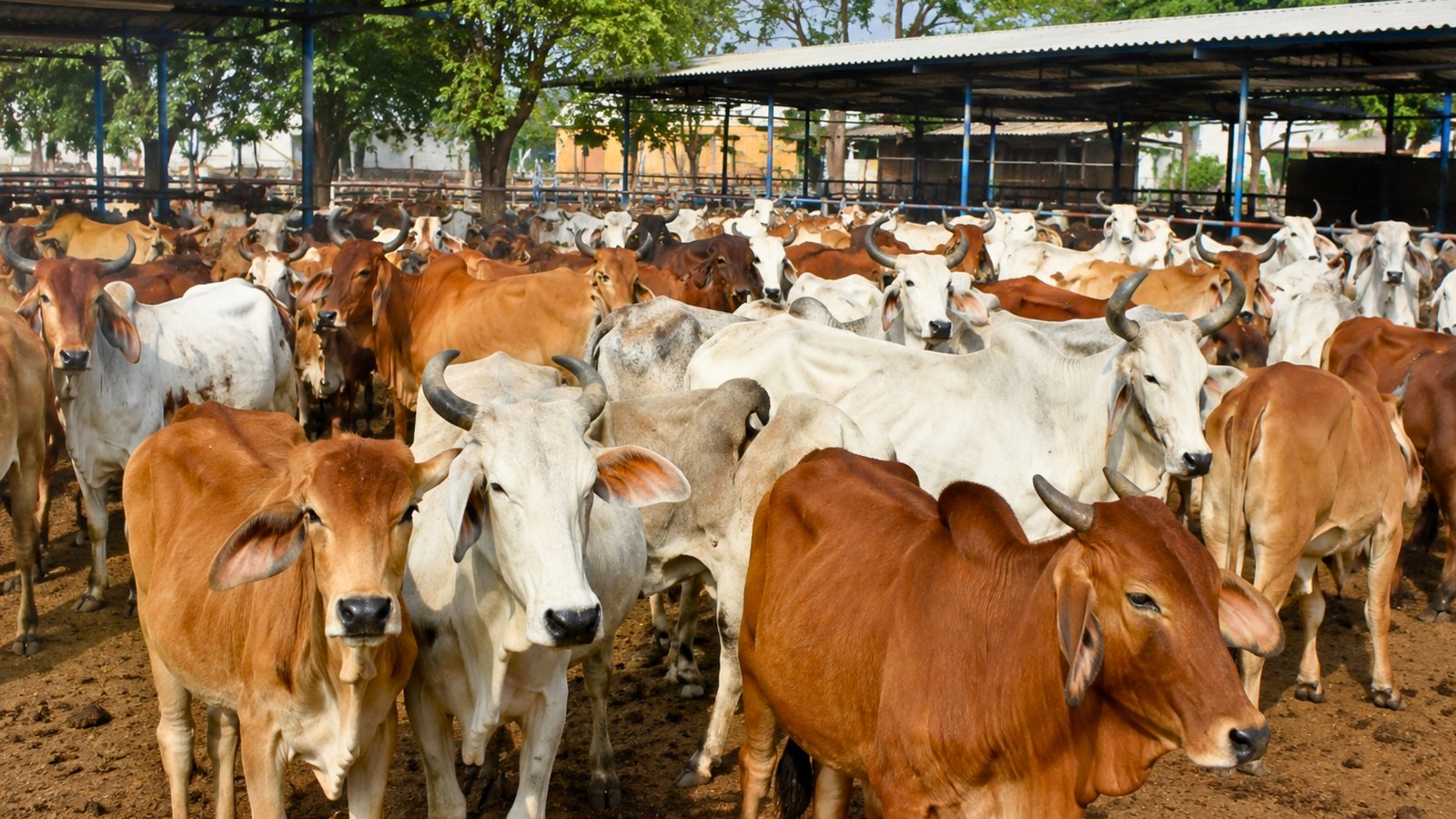
The leather industry in West Bengal fears a shortage of cow and buffalo hides as stricter enforcement of animal slaughter regulations by the state government is expected to disrupt raw material supplies. The impact could become even more visible after Eid ul Adha, traditionally a peak period for hide availability.
Cow sacrifice during this year’s Eid celebrations in the state dropped to negligible levels as the community complied with the stricter regulations.
Md Azhar, President of the Indian Leather Products Association (ILPA), speaking to PTI said the concern extends beyond Bakrid and is linked to tighter controls on cattle slaughter and the sale and purchase of cows and buffaloes.
“This is not only about Bakrid. The concern is over stricter regulations on cattle slaughtering and sale and purchase of cows and buffaloes, which will impact overall hide availability.”
– Md Azhar, President, Indian Leather Products Association (ILPA)
He said hides are usually available in large quantities after Eid ul Adha because many cows and buffaloes are slaughtered during the festival. These supplies support the tanning industry for several months.
Authorities have intensified checks on cattle transportation, documentation and slaughter practices under the West Bengal Animal Slaughter Control Act, 1950. The sale and purchase of cows and buffaloes are also being closely monitored.
The importance of cow and buffalo hides to the industry can also be seen in export data from the Directorate General of Commercial Intelligence and Statistics (DGCI&S), compiled by the Council for Leather Exports (CLE) and analysed by Leathernews.org. In FY 2023-24, India’s exports of leather, leather products and footwear stood at ₹35,782.58 crore, while West Bengal alone contributed ₹4,908.93 crore, accounting for about 13.72% of the country’s total exports in the sector.
In the finished leather category, which recorded exports of ₹3,500.89 crore, buffalo leather was the largest segment with exports worth ₹1,455.57 crore and a 41.58% share by value.
Cow leather exports stood at ₹460.73 crore, while buff calf and cow calf leather exports were valued at ₹113.46 crore and ₹86.27 crore respectively.
During the same period, West Bengal exported ₹137.76 crore worth of finished leather.
The state also exported leather gloves worth ₹1,315.57 crore during FY 2023-24, with industrial gloves accounting for 97.41% of shipments with ₹1,281.56 crore in export value. Industrial gloves are largely manufactured using cow and buffalo leather, making the segment particularly sensitive to any disruption in hide availability.
Leather goods remained West Bengal’s largest export category during the year, generating ₹3,351.79 crore in exports.
Azhar said the Hormuz crisis is reducing container availability, while global demand remains weak. He added that protecting workers’ livelihoods is now the industry’s biggest concern, with around 6-7 lakh (600,000-700,000) people directly or indirectly dependent on the leather sector in and around Kolkata.
ALSO READ: Kanpur Leather Exports Worth $54 Million Stuck Amid Strait of Hormuz Disruption
He also said India imports nearly 50% of its hide requirements and any decline in supply from West Bengal, one of the country’s major leather hubs, would increase dependence on imports.
Council for Leather Exports (CLE), Chairman, Ramesh Kumar Juneja speaking to PTI acknowledged that local hide availability would decline because of the regulations but said the industry must comply with the law.
“There will be some reduction in local availability of hides, but the situation can be managed through imports. Industry already imports about 50% of its requirements, as domestic supply is not adequate. Imports will increase, but there will be no crisis for production.”
– Ramesh Kumar Juneja, Chairman, CLE
With West Bengal contributing nearly 14% of India’s leather, leather products and footwear exports and several key product categories relying heavily on cow and buffalo hides, industry stakeholders will be closely watching how raw material availability evolves in the coming months.
ALSO READ: Indian Leather and Footwear Exports Dip 1.66% to $4.75 Billion in FY2025-26 Despite Global Headwinds