
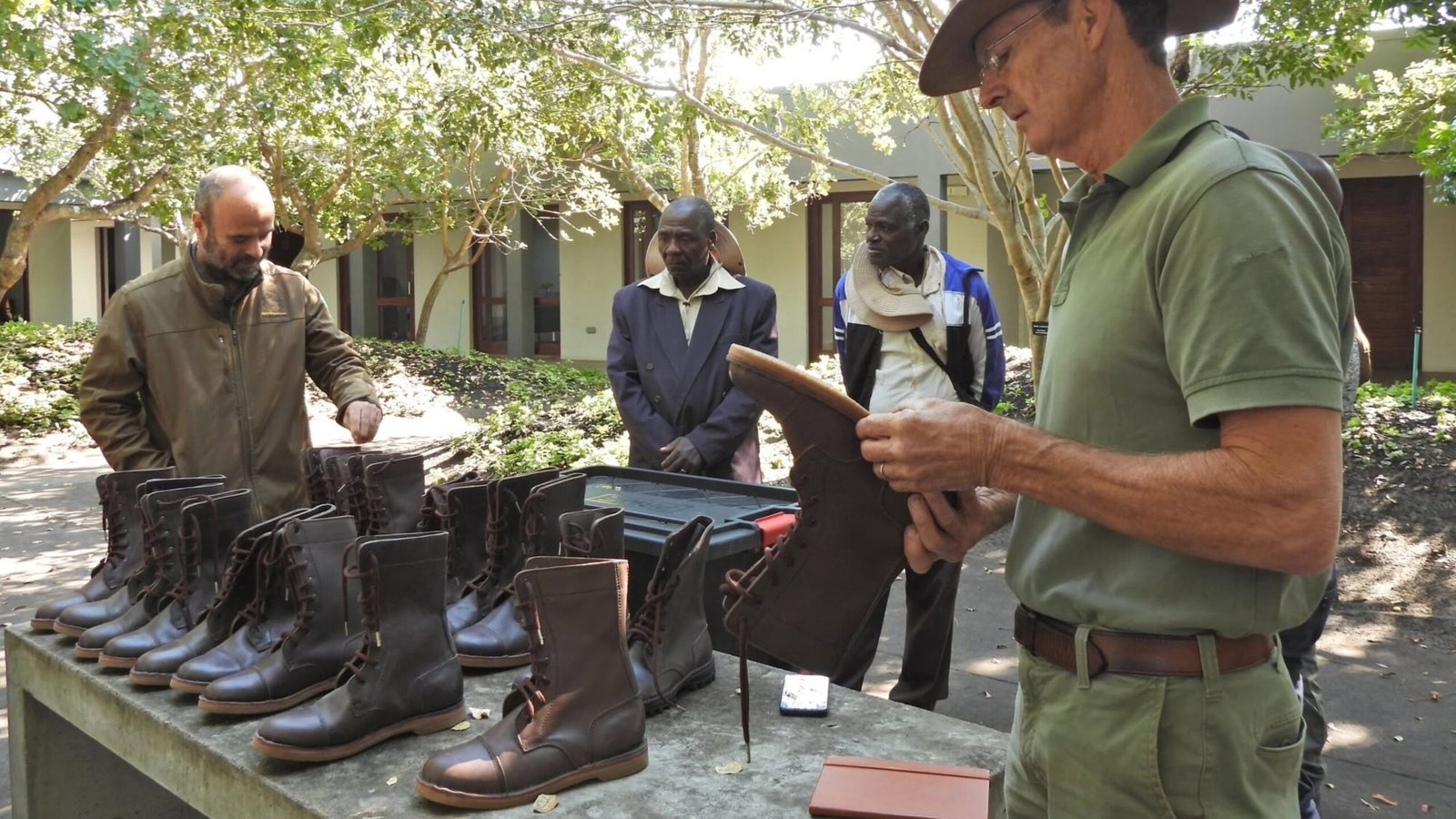
Maputo National Park in Mozambique has started testing the first 10 pairs of boots made from cattle leather by a local association in Mozambique. The boots will be used by forest and wildlife rangers as part of an initiative to create new income opportunities for local communities.
The conservation and wildlife sector project involves Maputo National Park and focuses on developing a local leather goods value chain. The boots will be given to selected rangers during a trial phase to evaluate their durability and resistance in both land and marine operations.
According to Miguel Gonçalves, administrator of Maputo National Park, the boots were produced under the Herding for Health Programme.
The programme is supported by the park with assistance from Conservation International and the Peace Parks Foundation, which is also a co-management partner of the conservation area near Mozambique’s capital, Maputo.
The initiative is led by cattle farmers with technical support from park professionals. It aims to help communities earn more income by producing goods not only for Maputo National Park but also for other institutions, communities and regions across Mozambique.
“The programme promotes sustainable grazing practices and encourages communities to develop economic initiatives based on local resources, such as processing cattle hides for the production of footwear and other leather goods.”
– Maputo National Park Statement
Maputo National Park is part of the Lubombo Transfrontier Conservation Area, which connects four conservation areas across Mozambique, South Africa and Eswatini. The park offers both safari and marine tourism experiences.
Since rehabilitation work began in 2006, the park has successfully reintroduced 14 species and now has around 32,000 animals.
In July 2025, UNESCO added Maputo National Park to its World Heritage List during its 47th session in Paris, noting that the park contains terrestrial, coastal and marine ecosystems and is home to nearly 5,000 species.
ALSO READ: Govt of Mozambique Says Leather Industry Still Stuck at Raw Material Stage