
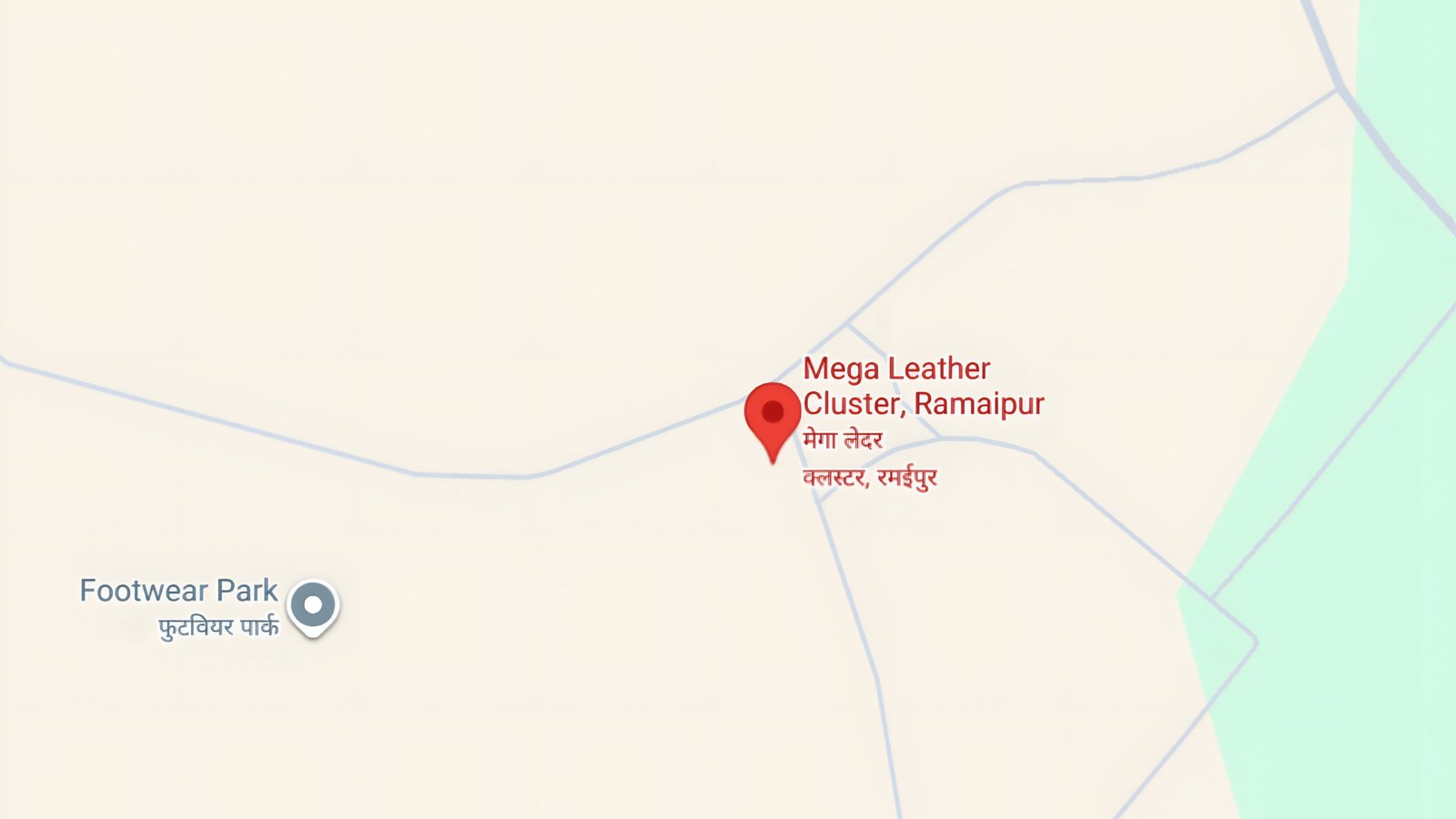
The long delayed Ramaipur Mega Leather Cluster project has received fresh momentum after the Uttar Pradesh Chief Minister’s Office handed responsibility for the project to Uttar Pradesh State Industrial Development Authority (UPSIDA). The project, which proposes about ₹6,000 crore (~$620 million) in investment, had remained stalled for years due to unresolved land exchange issues, according to multiple media reports.
The Ramaipur Mega Leather Cluster is considered a key infrastructure project for Kanpur’s leather industry. The proposed cluster includes plans for 175 tanneries, along with footwear, saddlery and other leather product manufacturing units.
A Special Purpose Vehicle (SPV) was formed nearly 13 years ago to implement the project. Of the 235 acre cluster, 55 acres were earmarked for tannery units while around 30% of the total area was proposed to be developed as green belts.
The project also includes plans to set up a 20 MLD treatment plant to support environmental compliance within the cluster.
Once operational, the mega leather cluster is expected to generate an annual turnover of ₹13,000 crore to ₹15,000 crore (~$1.3 – 1.5 billion)
The project, valued at ₹451 crore (~$46 million) was also expected to receive ₹125 crore (~$13 million) in financial assistance from the Central Government. It received in-principle approval from the Centre 4 years ago, following which the SPV initiated the land exchange process.
However, the project remained stalled after issues relating to nearly 27 acres of land could not be resolved.
According to Yadvendra Sachan, Regional Chairman, Council for Leather Exports (CLE), the issue of the Ramaipur Mega Leather Cluster was raised during a meeting with Uttar Pradesh Chief Minister Yogi Adityanath in Lucknow on June 28, where the Chief Minister assured stakeholders that positive action would be taken.
During the meeting, discussions also covered attracting foreign investment, strengthening exports, creating an industry-friendly ecosystem and positioning Uttar Pradesh as a global hub for leather and footwear manufacturing.
Following directions from the Chief Minister’s Office, UPSIDA has now initiated the process to move the project forward.
“This initiative has the potential to transform Kanpur’s leather ecosystem by promoting modernization, encouraging innovation, strengthening manufacturing capabilities, and generating large-scale employment.”
– Yadvendra Sachan, Regional Chairman, Council for Leather Exports (CLE) (via LinkedIn)
The cluster is expected to generate more than 2,00,000 direct and indirect employment opportunities, including around 50,000 direct jobs and 1,50,000 indirect jobs providing a significant boost to Kanpur’s leather industry and the local economy.