
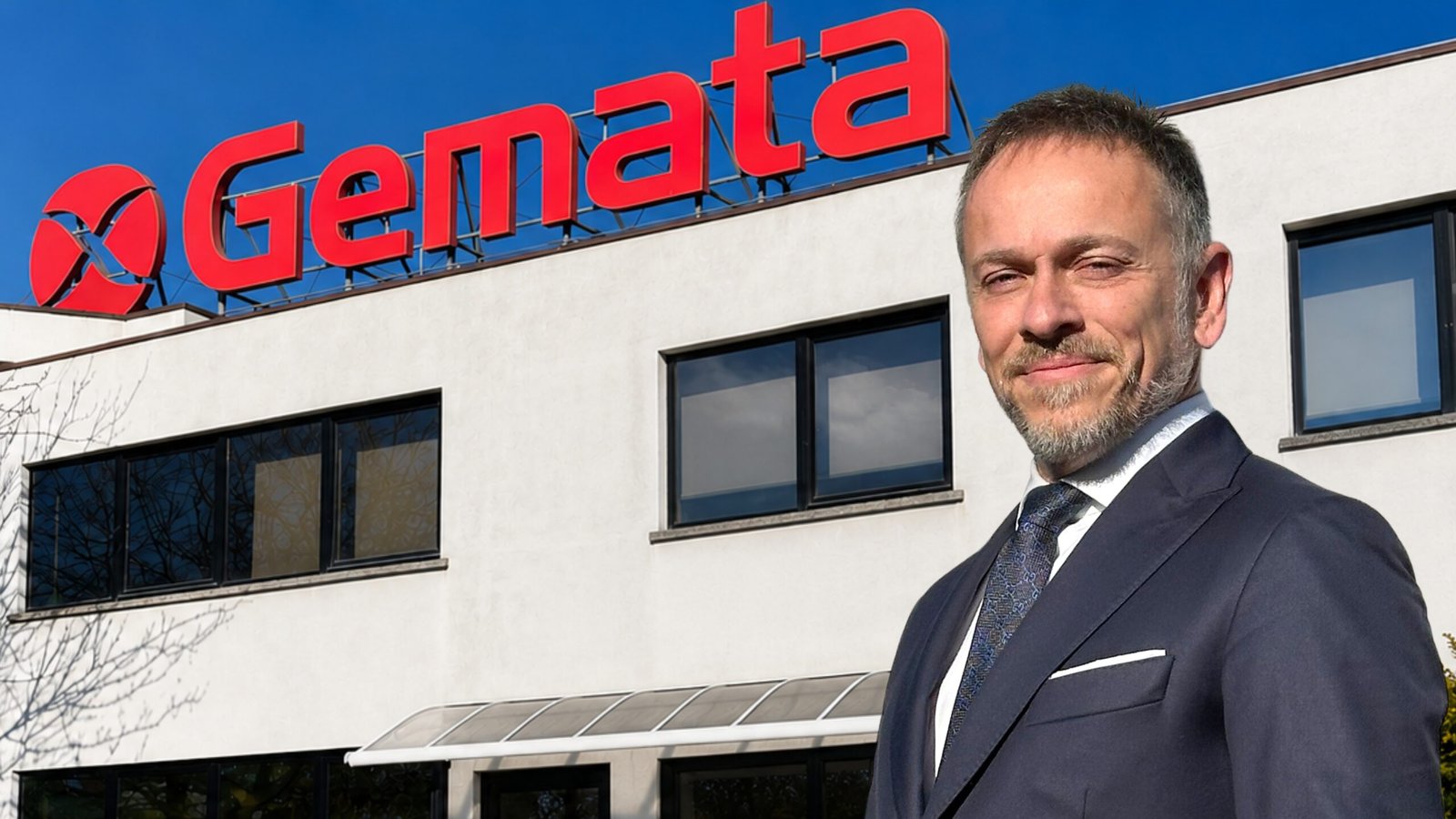
As automation, digitalisation and artificial intelligence continue to reshape manufacturing, leather machinery companies are playing an increasingly important role in helping tanneries improve productivity, efficiency and sustainability.
In this edition of the LN Executive Interview Series, Leathernews.org spoke with Giulio Mandruzzato, Chief Executive Officer of Gemata Group, about the company’s transformation, innovation, AI, automation, sustainability and the future of leather finishing.
Leathernews.org: Could you please introduce yourself and tell our readers about your role at Gemata?
Giulio Mandruzzato: I joined Gemata as CEO with a very clear mission: to accelerate the company’s transformation from a machinery manufacturer into a technology and process partner for the global leather industry.
Gemata has built an extraordinary reputation over more than 40 years through engineering excellence. My responsibility is to build on that heritage while preparing the company for the next generation of manufacturing. This means investing in innovation, digital technologies, automation, artificial intelligence and service models that create measurable value for our customers.
Today, our objective is not simply to build better machines. It is to help leather manufacturers become more productive, more competitive and more profitable.
LN: Gemata has been serving the global leather industry for more than 4 decades. Looking back, what have been the defining milestones that transformed the company into one of the world’s leading manufacturers of leather finishing machinery?
Giulio Mandruzzato: The first milestone was certainly our ability to specialise in leather finishing while maintaining a strong engineering culture. Over the years Gemata has consistently introduced technologies that improved productivity, application quality and process reliability.
Another important milestone has been our international approach. We have never considered ourselves an Italian company selling abroad. We have always worked alongside tanneries across every major leather producing country, learning from different production methods and customer needs.
More recently, the acquisition of Todesco has significantly expanded our technological capabilities and strengthened our position as a complete partner for leather finishing solutions.
Today another milestone is beginning. We are evolving from supplying equipment to delivering integrated manufacturing ecosystems combining machinery, software, digital services and advanced process knowledge.
ALSO READ: Todesco Joins Gemata to Expand Leather Finishing Solutions
LN: The leather industry has evolved significantly over the past decade. From your perspective, what are the biggest changes you have witnessed and how have they influenced the way Gemata develops new technologies and solutions?
Giulio Mandruzzato: The industry today operates under completely different pressures than it did 10 years ago.
Labour shortages, increasing production costs, stricter sustainability requirements and higher customer expectations have changed the priorities of every tannery.
Quality alone is no longer enough. Manufacturers now need repeatability, flexibility, traceability and efficiency. This has fundamentally changed the way we design machines.
Every new project now begins with a simple question: “How can we make the customer’s entire process more efficient?”
Sometimes the answer is mechanical innovation. Sometimes it is automation. Sometimes it is software. Increasingly, it is the intelligent combination of all three.
LN: Which recent technological developments or innovations of Gemata are you most excited about and how are they helping global leather manufacturers?
Giulio Mandruzzato: Several developments are particularly exciting because they directly solve real production problems.
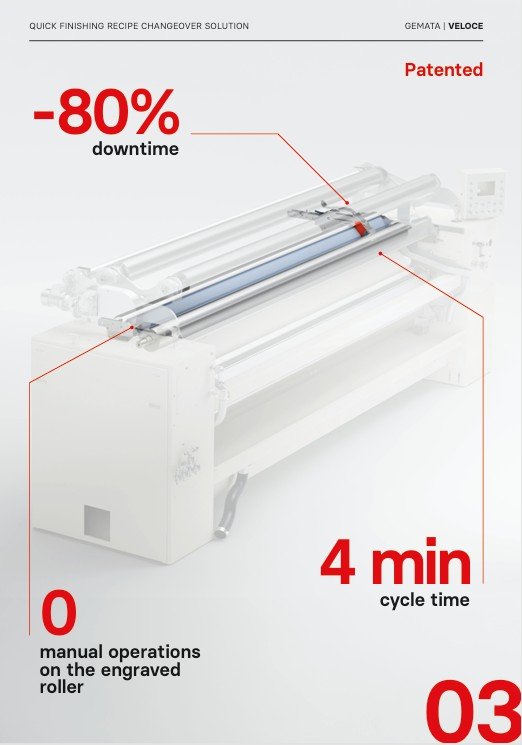
One example is our new automatic cleaning system, which dramatically reduces article changeover times. What previously required around 20 minutes of non-productive machine downtime can now be completed in approximately four and a half minutes.
That means nearly 80% less downtime and significantly higher productive capacity without increasing labour. A completely automatic procedure that doesn’t involve the operator anymore, with a better environment for safety.
At the same time, we are introducing digital platforms capable of collecting production data, monitoring machine performance and supporting predictive maintenance. The future of leather finishing will not be driven by faster machines alone. It will be driven by smarter factories.
LN: Leather manufacturers today are expected to produce higher-quality leather while reducing production costs, waste and environmental impact. How is Gemata helping customers achieve this balance?
Giulio Mandruzzato: We believe quality, productivity and sustainability should never be viewed as competing objectives. A well-designed production process naturally improves all three.
Our technologies focus on reducing overspray, optimising chemical application, shortening setup times, minimising waste and increasing process consistency.
Every kilogram of chemical saved, every minute of downtime eliminated and every defect avoided creates both economic and environmental value. Sustainability begins with efficiency. The most sustainable machine is often the one that allows the customer to consume fewer resources while producing better leather.
LN: Having worked with leather manufacturers around the world, what are the most common challenges you see tanneries facing today and how does Gemata’s technology help in overcoming them?
Giulio Mandruzzato: Although every market has its own characteristics, the challenges are surprisingly similar. Manufacturers struggle with labour availability, increasing operating costs, process variability and the need to react quickly to smaller production batches.
At Gemata we focus on simplifying operations while making production more repeatable. Automation reduces dependency on manual operations. Digital monitoring provides objective production data. Machine design improves reliability and ease of use. Ultimately, we help our customers produce more consistent results with fewer resources.
LN: The leather finishing process depends heavily on both machinery and chemistry working together. From your perspective, how important are partnerships between machinery manufacturers and chemical companies in shaping the future of leather finishing?
Giulio Mandruzzato: They are absolutely essential. No machine can achieve its full potential without understanding how chemistry behaves during the finishing process. Likewise, even the most advanced chemical products cannot deliver optimal performance without precise and repeatable application.
The future belongs to collaboration rather than isolated innovation.
Machinery manufacturers, chemical suppliers and leather producers must increasingly work together from the earliest stages of product development. Only through this integrated approach can we achieve higher quality, lower consumption and more sustainable production processes
LN: Automation, digitalisation and Artificial Intelligence are becoming increasingly important across manufacturing industries. How do you see these technologies shaping the future of leather finishing over the next 5 to 10 years?
Giulio Mandruzzato: I believe we are only at the beginning. Artificial Intelligence will not replace human expertise, but it will enhance it. AI will analyse production data, optimise machine settings, predict maintenance requirements and support operators in making faster and more informed decisions.
Digitalisation will transform machines into connected production systems capable of continuously learning from operational data.
Factories will increasingly become data driven environments where every production decision is supported by measurable information rather than experience alone. That represents one of the biggest opportunities our industry has ever seen.
LN: Italy has long been recognised as a global leader in leather machinery manufacturing. In your opinion, what continues to give Italian machinery manufacturers a competitive advantage in today’s global market?
Giulio Mandruzzato: Italian companies possess a unique combination of engineering capability, creativity and deep understanding of leather itself. Many of us have grown alongside the tanning industry for generations.
We understand not only how to build machines, but also how leather behaves, how finishing works and how customers produce value. That practical knowledge is extremely difficult to replicate. The challenge today is to combine this traditional expertise with digital technologies and new business models. Those companies capable of doing both will continue to lead the global market.
LN: Sustainability has become one of the biggest priorities across the leather value chain. How is Gemata supporting customers in achieving more sustainable and responsible manufacturing processes?
Giulio Mandruzzato: For us, sustainability is not a separate project. It is embedded in engineering. We design solutions that reduce energy consumption, minimise chemical waste, optimise resource utilisation and extend machine life.
Digital monitoring also allows customers to understand where resources are being consumed and where improvements can be made. The most effective sustainability strategy is continuous improvement supported by measurable data.
Our service network is spread across every area where we have customers. We can provide assistance with local resources in the majority of the customers’ areas. That is precisely the direction we are pursuing.
LN: Looking ahead, what are Gemata’s strategic priorities over the next few years and where do you see the biggest opportunities for growth within the global leather industry?
Giulio Mandruzzato: Our strategy is based on 4 pillars.
- First, continuous product innovation.
- Second, digital transformation and Artificial Intelligence.
- Third, expanding our service offering throughout the entire machine lifecycle, locally and very close to the customer.
- Fourth, strengthening our international presence through strategic partnerships and acquisitions.
We see enormous opportunities in helping manufacturers improve productivity rather than simply increasing production capacity. Customers increasingly expect complete solutions that combine machinery, software, process optimisation and long-term support. This is exactly where Gemata intends to lead.
LN: Finally, if you could share one piece of advice with leather manufacturers investing in new technologies today, what would it be?
Giulio Mandruzzato: Do not evaluate technology based only on its purchase price. Evaluate its ability to improve your entire production process over the next 10 years.
The best investment is not necessarily the least expensive machine. It is the solution that generates the greatest long-term value through higher productivity, better quality, lower operating costs and greater flexibility.
Technology should never be considered a cost. It should be considered a competitive advantage.
To know more about Gemata Group, click here to visit their website.
Copyright © Leathernews.org. This interview is the exclusive editorial content of Leathernews.org and may not be reproduced, republished or distributed in whole or in part without prior written permission.