
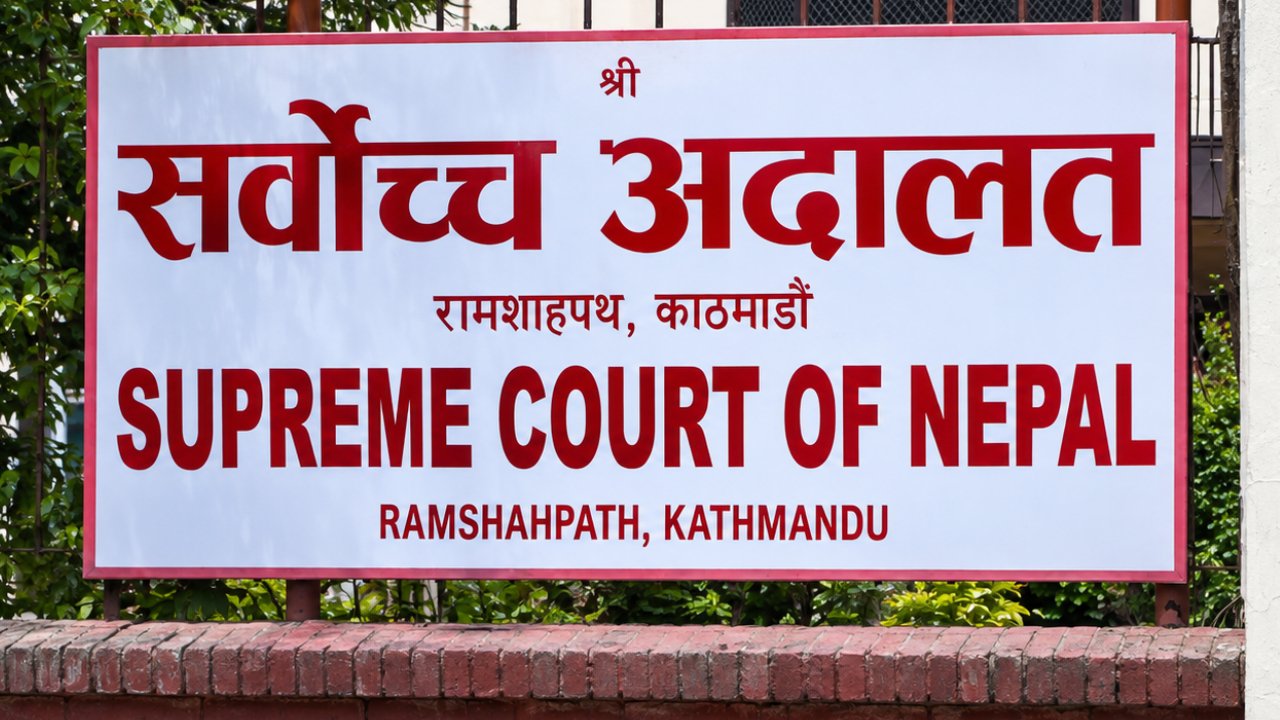
Nepal’s Supreme Court has ordered government authorities to respond to a petition seeking environmental standards for leather processing including rules on their distance from residential areas. The court has also directed that the case be given priority citing environmental sensitivity and public health concerns.
The petition was filed by law student Vivek Chaudhary against the Prime Minister and Council of Ministers Office, the Ministry of Industry, Commerce and Supplies, the Ministry of Forests and Environment and the Department of Environment.
Following an initial hearing a single bench led by Justice Sunil Kumar Pokharel issued a show cause order asking the respondents to submit written responses.
The petition argues that Nepal lacks specific standards for controlling hazardous chemicals, wastewater, industrial waste and strong odours from tanneries.
It also cites a response from the Department of Industry to a request under the Right to Information Act which reportedly confirmed that separate distance and environmental standards for the leather industry do not exist.
The petitioner has asked the court to direct the government to introduce a policy requiring highly polluting leather industries to operate at least 2 kilometres (1.24 mi) from densely populated areas. The proposed definition covers areas with at least 1,000 people or 200 households.
The petition also refers to residents in certain locations who it says have faced odour and pollution from nearby leather facilities for years despite repeated appeals.
Other demands include mandatory wastewater treatment plants at every tannery, safe disposal of sludge and chemical waste, limits on odour and air emissions and improved occupational safety for workers.
The petition argues that clear policies based on scientific studies and international standards are needed to protect constitutional rights to live with dignity, a clean environment and health.
With the case granted priority, the Supreme Court is expected to hear it on a priority basis.