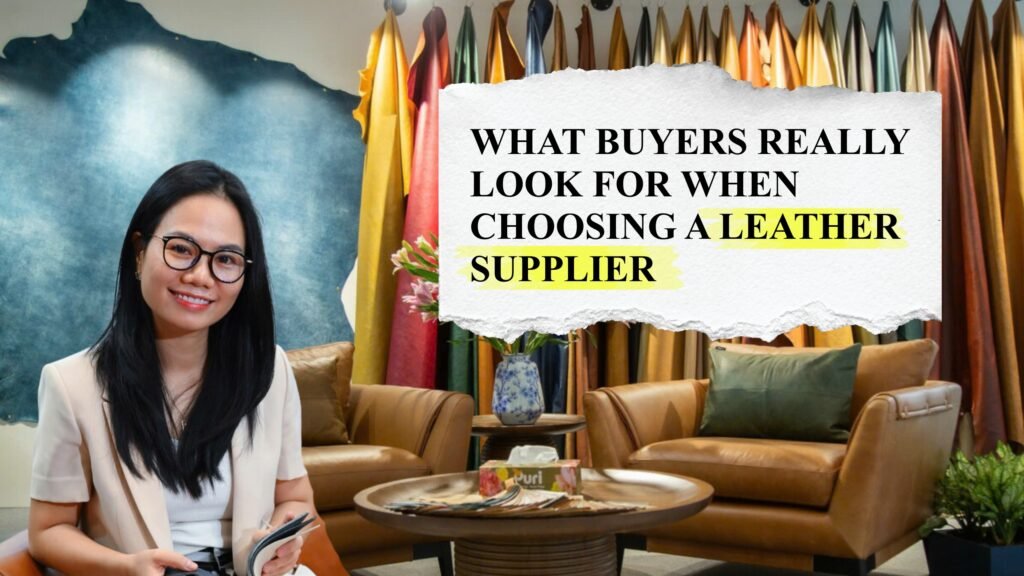
Throughout my years working with furniture manufacturers, brands, designers, and sourcing teams across different markets, I have come to realize that buyers are not simply evaluating a product or material. They are evaluating the supplier behind it.
The leather industry, which I have been responsible for over the years, is no exception. Below are some of the most common questions I encounter when discussing sales and customer relationships in the leather business.
Do Buyers Always Want the Lowest Price?
Not necessarily. This is perhaps one of the most common misconceptions among sales professionals.
Price is always important. However, in many cases, it is not the only factor that drives a purchasing decision.
What most buyers are looking for is not the lowest price, but the lowest risk.
A manufacturer can lose significantly more money due to delayed deliveries, inconsistent colors, unstable quality, or production disruptions than they could ever save by purchasing slightly cheaper leather.
In many cases, the cheapest leather can become the most expensive option if it creates problems later in the production process.
What Is the First Thing Buyers Evaluate When Contacting a New Supplier?
Trust.
Even before discussing pricing, buyers are often trying to answer a simple question:
“Can this supplier consistently deliver what they promise?”
Many suppliers focus on presenting their products.
Experienced buyers, however, focus on evaluating the supplier’s capabilities.
They want to understand whether the supplier has the expertise to meet their requirements, whether they have handled similar projects before, and how they respond when unexpected challenges arise.
A beautiful leather sample may create interest. Trust is what creates business.
What Frustrates Buyers the Most?
Lack of clear communication.
Most buyers understand that challenges are part of doing business. In fact, this can be even more relevant when working with genuine leather, a material influenced by natural characteristics and variables.
Production delays can happen, raw material issues can occur, logistics disruptions and quality concerns are realities that every business may face.
What frustrates buyers is not the existence of problems, it is discovering those problems too late.
Most customers are willing to adjust their plans when they are informed early. Very few are willing to accept being surprised at the last minute.
When suppliers communicate openly and transparently, trust is often strengthened. When information is delayed or withheld, trust can disappear very quickly.
We may secure an order, but we may also lose a customer.
What Makes Buyers Stay with a Supplier for Many Years?
Consistency, Transparency, Honesty, a willingness to learn and improve, and perhaps most importantly, a genuine commitment to partnership.
Long-term business relationships are rarely built on the lowest price; they are not built on having the largest factory, nor are they built on the most impressive presentations.
They are built on the ability to consistently meet expectations.
In many cases, buyers are not looking for a perfect supplier. They are looking for a predictable one.
When customers know what to expect, they can plan production more effectively, manage inventory with confidence, and better serve their own customers.
That confidence is what creates long-term partnerships.
What Is the Biggest Misconception Leather Suppliers Have About Buyers?
Many suppliers believe that buyers are simply purchasing leather. At a basic level, that is true. Leather is the product they need.
However, if buyers only wanted leather, there would be countless suppliers capable of providing it.
So why do they choose one supplier over another?
The answer is peace of mind.
Buyers want confidence that materials will arrive on time, perform as expected, support their production requirements, and help them satisfy their own customers.
Once suppliers truly understand this, the conversation changes.
It is no longer about selling leather. It becomes about helping customers solve business challenges.
In my experience, buyers rarely remember the lowest quotation. They remember the supplier who helped them avoid a problem.
Leather is the product. Trust is the foundation of a long term business relationship.