
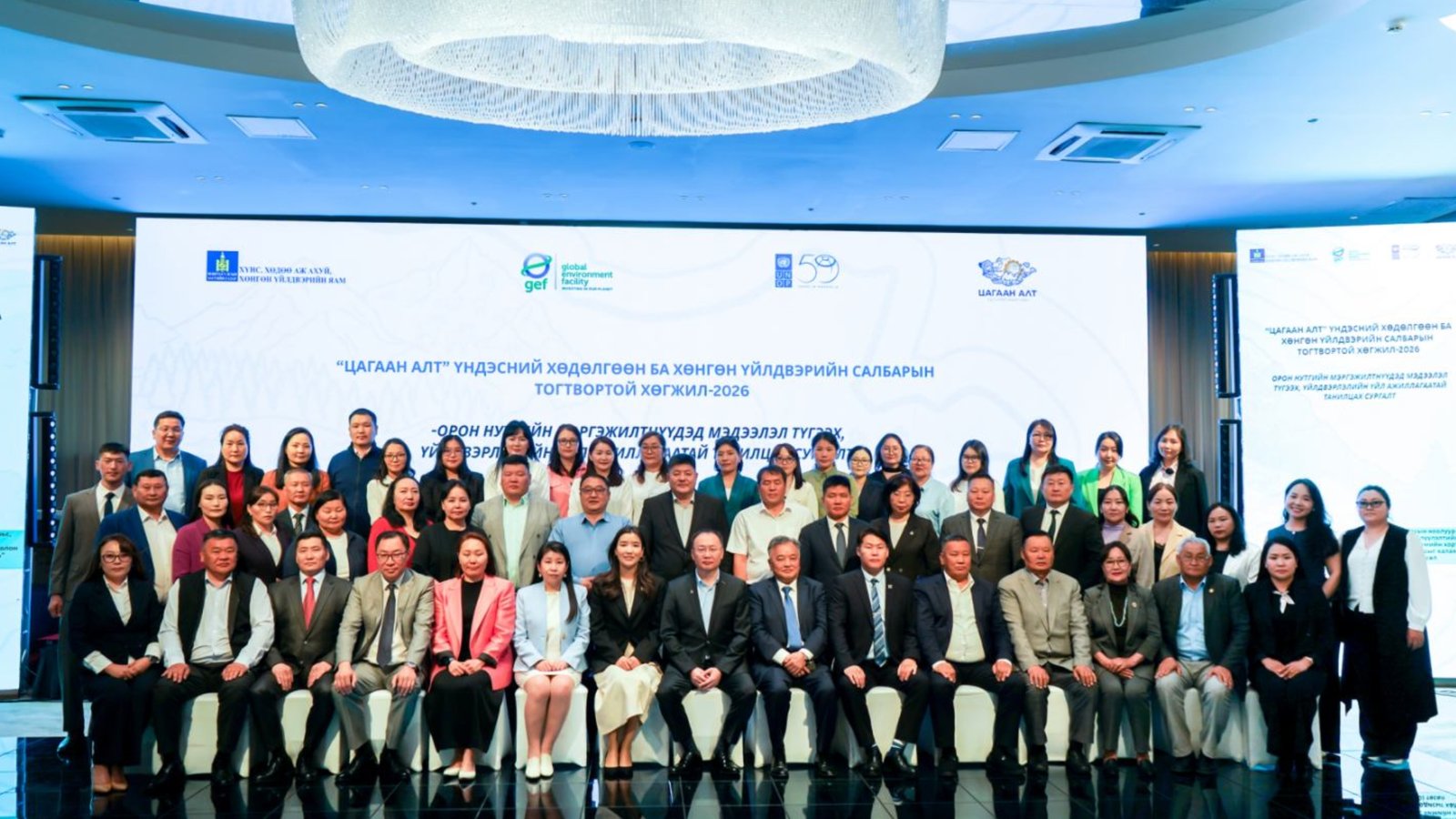
The United Nations Development Programme (UNDP) and the Mongolian Ministry of Food, Agriculture and Light Industry organized a 3 day workshop in Ulaanbaatar from June 10 to 12, 2026, to support the sustainable development of Mongolia’s cashmere, wool and leather sectors.
The event was held under the “Elimination of Hazardous Chemicals from Supply Chains in Mongolia” project 2025 to 2030, funded by the Global Environment Facility (GEF) and implemented by Mongolia’s Ministry of Food, Agriculture and Light Industry with support from UNDP. The project aims to reduce hazardous chemical use in the cashmere, wool and leather sectors.
The workshop brought together officials from Food and Agriculture Departments across all 21 provinces, along with more than 90 representatives from government agencies, financial institutions, industry associations and the private sector.
Participants discussed financing and support mechanisms, raw material preparation, traceability systems, veterinary services, standards, international requirements and chemical use across the cashmere, wool and leather supply chains.
In her opening remarks, B. Javkhlan, Advisor to the President of Mongolia, said that integrating Mongolia’s livestock-based resources into the economy and developing value-added production remains a key state policy priority.
Lin Cao, Deputy Resident Representative of UNDP in Mongolia, highlighted the important role played by local specialists in translating policy into action.
She said their leadership is essential to advancing more sustainable cashmere, wool and leather supply chains while reducing chemical-related risks.
The workshop combined technical sessions with visits to leading factories and professional associations in the cashmere, wool and leather industries.
The visits provided participants with first hand insights into the value chain, from raw material preparation to finished products.
According to organizers, the visits demonstrated how proper raw material preparation at the herder level directly influences product quality, competitiveness and value addition.
By the end of the workshop, local decision makers and specialists had gained a deeper understanding of supply chain dynamics, production requirements and current industry challenges.
Participants emphasized the need to improve livestock quality, strengthen preventive veterinary measures and enhance cooperation between producers and industry associations.
The initiative also seeks to promote environmentally friendly, resource efficient and circular economy based production practices across Mongolia’s livestock based industries.